The Foundational Redesign that turned 55% Host Delivery Adoption at Zoomcar
We weren't just patching up old flaws; we went back to first principles to rethink Host Delivery fundamentally. We saw that the old system was bleeding Host trust and leading our highest-rated Hosts to stop listing their cars altogether. The solution? A flexible, map-first setup with clear pricing and necessary opt-out controls.
App name / Client
Zoomcar Host
My Role
Product Designer
Industry
Travel Marketplace
Platform
Application
Here's a quick look of semi-interactive prototype of the solution
(Expand for a better view)
The Problem: Why Flexibility and Trust Failed Our Hosts
When a Host lists their car, they want to maximize their earnings, and delivery is a key part of that. But the system was actively working against them, creating painful scenarios for even our best Hosts (D30 4.5+ rated).
We spoke to our Hosts and the stories were eye-opening:
The All-or-Nothing Trap: Hosts had zero flexibility. One Host shared that when an emergency came up and they couldn't deliver the car, the system gave them no way to reject just the delivery. They were forced to cancel the entire booking, which tanked their ratings and listing rank. The takeaway was huge: Hosts absolutely need the ability to opt out of delivery temporarily without having to cancel bookings.
The Hidden Cost of Distance: The old system led to Hosts driving crazy distances that ate into their profits. Another Host lamented driving nearly 20 kilometers just to deliver the car, only to realize the delivery fee didn't even cover the fuel and time. They delisted their car immediately because it "didn’t make sense".
The takeaway: Hosts must be able to set a comfortable delivery radius.
The UI Was Working Against Us
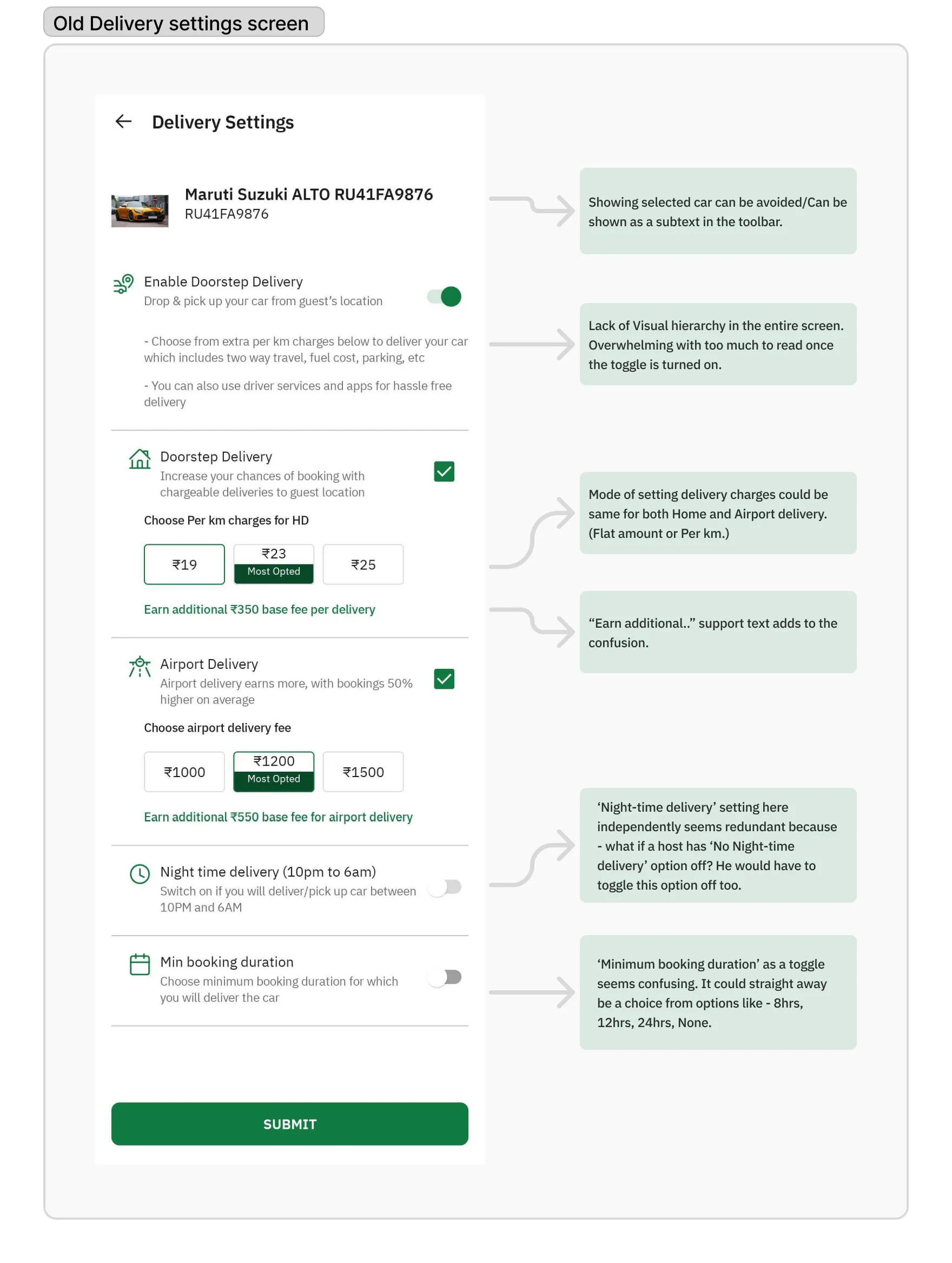
The Old Delivery settings screen was a visual mess. Overwhelming, confusing, and lacking hierarchy. We realised the old system's approach of treating "Airport Delivery" as a special category wasn't scalable. If other major points of interest, such as railway stations, started gaining high traction, we'd have to keep adding special-case categories, and that just wasn't a smart approach. There was a clear design and structural mismatch we needed to fix.
Brainstorming & Ideation: Giving Control Back
We gathered the team, including Sukrit (Product Manager), Rohil (UI Engineer), and Ashish (Backend)—and went back to first principles. We agreed that delivery is a Host’s promise, and to keep that promise trustworthy, they need control over where and when they deliver.
We moved away from the text-heavy approach and designed a new Host Delivery User Flow based on the idea of going the map-first route. This visually intuitive approach was the key to delivering clarity to the Host.
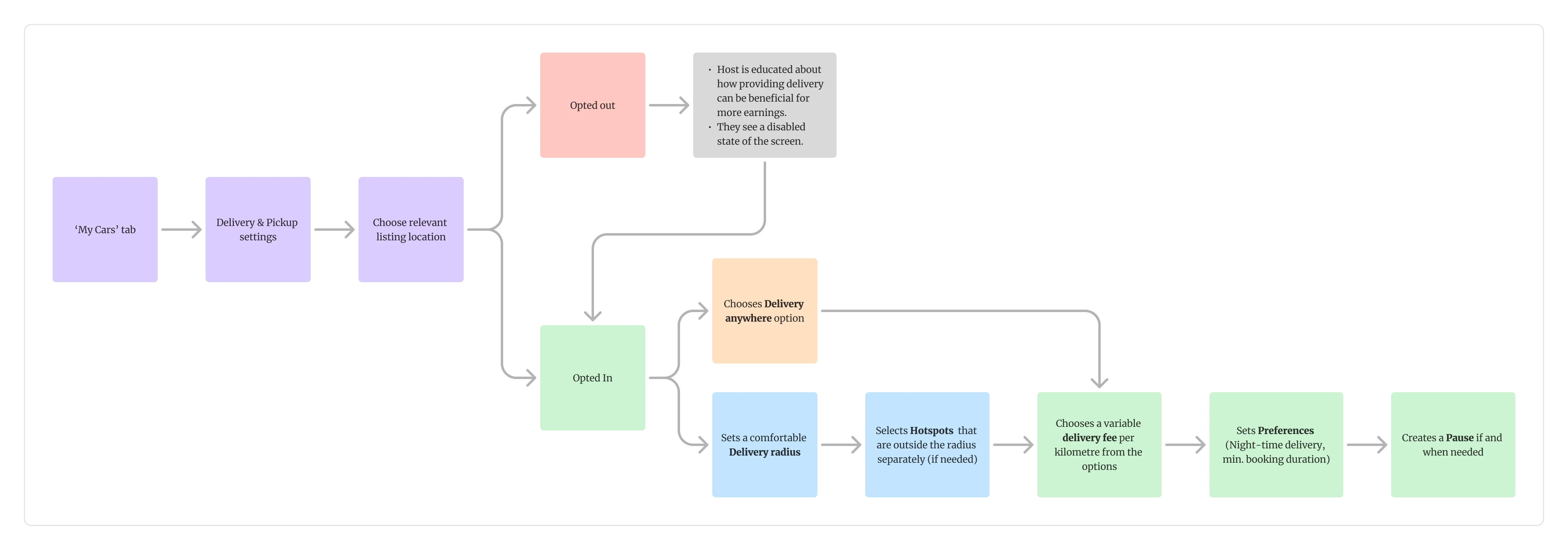
After sketching wireframes and looking at inspiration, the structure was clear: first, set the location, then visually define the radius, and finally set the pricing and preferences
The Solutions: A Map-First Approach to Trust
Just like in the Listing Widget project, we focused on using clear controls and education to guide the user.
Here’s what we launched:
Visualizing Delivery Radius and Hotspots
We introduced the map control screen because trust grows with clarity.
• Hosts can now visually set a radius they are comfortable with, solving the issue of unexpected long-distance drives.
• We replaced the clunky "Airport Delivery" setup with flexible Hotspots. This allows a Host to set specific, higher delivery incentives for locations like the airport, even if they fall outside their standard radius. This way, a Host can easily say: "I’m not okay delivering outside 5km, unless it’s to the airport."
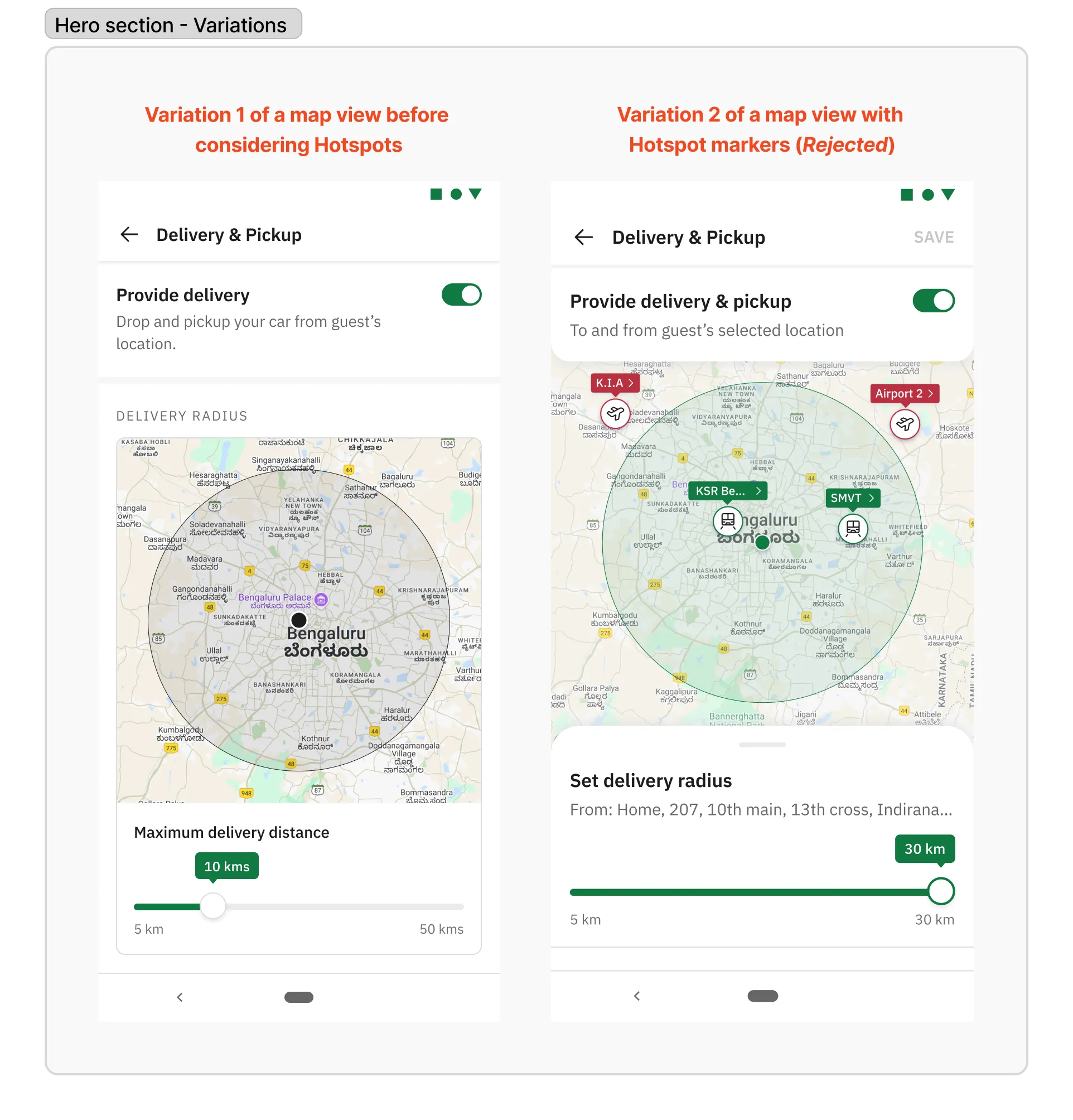
We also kept the option for Hosts to "Deliver anywhere in the city," ensuring a smooth transition for existing flexible Hosts
2. The Crucial 'Pause Delivery' Feature
To solve that core, frustrating "all-or-nothing" cancellation problem, we introduced the Pause Delivery feature. This gives Hosts the temporary opt-out needed when life happens, so they don't have to disable their entire listing.
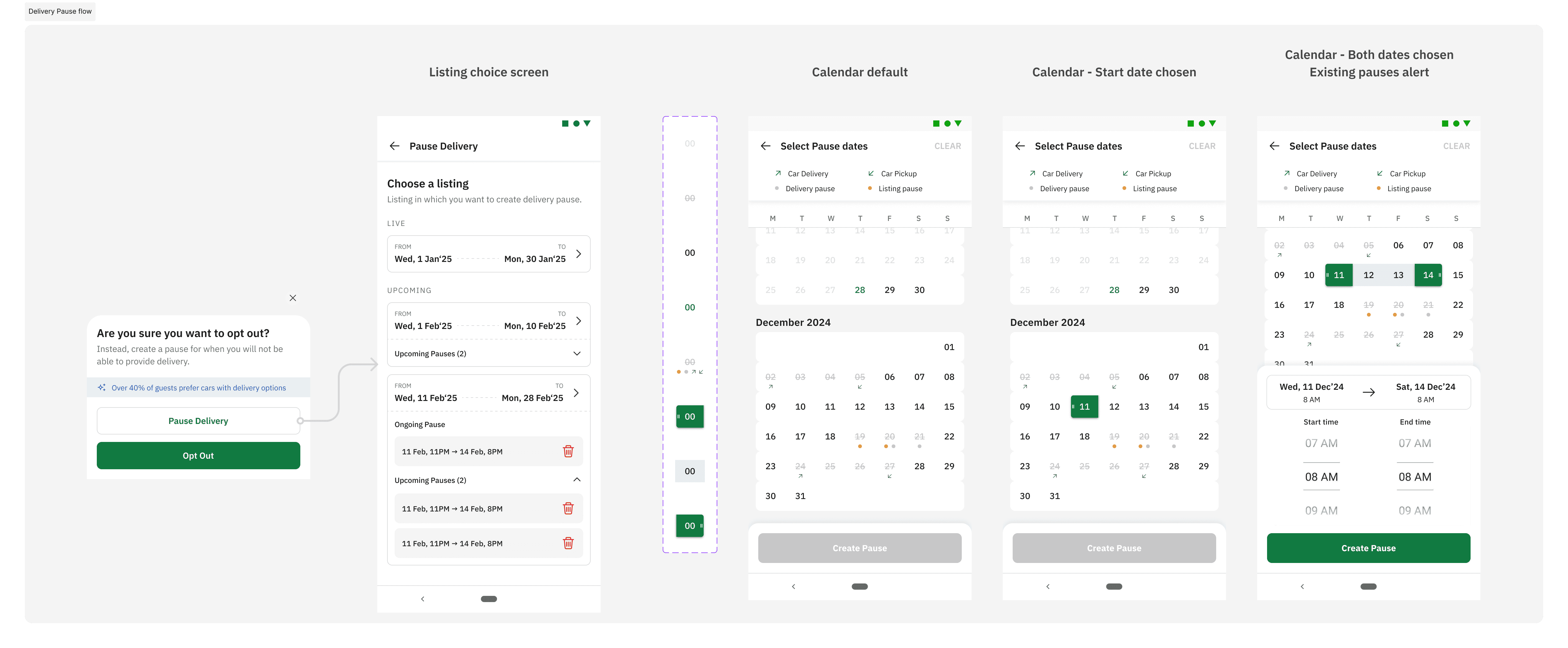
We also updated other key preferences Hosts cared about, like No night-time delivery (now with adjustable time windows) and setting a Minimum booking duration.
3. Clearer Pricing and Education
Inspired by predictable cab fare models, we redesigned the pricing. Hosts can now pick from 3 preset rates that include a semi-variable fee structure, ensuring they are compensated fairly for their effort. Hotspots also received an additional incentive to keep them lucrative.
To ensure Hosts adopted these changes smoothly, we added contextual info-boxes and examples. We even built a dedicated education tour for first-time users, making sure they understood their new controls immediately
Tradeoffs and Compromises (Because Design Isn't Perfect)
Every successful product comes with tough decisions:
• Location Management: Since delivery preferences are tied to the listing location (and Hosts can list from multiple places), we had to include a "Choose Listing Location" step. Ideally, I would have loved the radius to auto-adjust based on real-time car location, but that was outside our current tech limitations.
• Cost & Delay Constraints: Due to API cost concerns, we couldn't include distance indicators for Hotspots. We also simplified the interaction around the opt-in checkbox inside the hotspot detail overlays due to implementation delays.
The Impact
And folks, That’s how we came up with the solution to give our Hosts complete control and better communication. This fundamental effort delivered significant, measurable results:
• Delivery Opt-in: Rose sharply from ~40% to ~55%.
• Host Trust: Host cancellations due to delivery issues reduced significantly.
• The overall redesign positively impacted Host sentiment and retention.
Thank you.
Found this project interesting and want to discuss more? Connect with me on LinkedIn ☺